Do You Need a Permit to Install a Fence in Illinois?
More than likely, if you live in Illinois, a fence permit is required with few exceptions.

Do You Need a Permit to Install a Fence in Illinois?
Installing a new fence is one of the most popular home improvement projects for Illinois homeowners—whether you’re seeking privacy, security, pet containment, or curb appeal. But before you order materials or hire a contractor, one critical question comes up again and again: Do you need a permit to install a fence in Illinois?
The short answer is: It depends on where you live. Illinois has no single statewide rule that applies to every residential fence. Permit requirements, height limits, setbacks, and application processes are set by individual cities, villages, and counties. Getting this wrong can lead to fines, forced removal, or delays, so checking local rules is essential.
Here’s a clear, up-to-date guide (as of 2026) to help Illinois homeowners navigate fence permits.

Statewide Context
Illinois does not impose a uniform building permit requirement for residential fences. Local municipalities and counties control the rules under zoning ordinances and building codes (most follow versions of the International Residential Code with local amendments).
One important statewide law is the Illinois Fence Act (765 ILCS 130). This long-standing statute (dating back to the 1800s) primarily addresses division fences—fences that sit on the boundary line between adjoining properties, especially those used for farming or grazing. In many cases, neighboring landowners share the cost of building and maintaining such fences. For typical suburban or urban residential privacy fences, the Act is less relevant, but boundary disputes can still arise.
Key takeaway: Always verify rules with your specific city or county building/zoning department. HOA covenants (if applicable) often add stricter requirements on materials, style, color, and height.
Chicago Fence Permit Rules
Chicago has one of the clearest (and most frequently searched) sets of rules:
- No building permit is required for a fence that is 5 feet or shorter (measured on both sides of the fence) and that conforms to the Chicago Zoning Ordinance.
- A permit is required for any fence taller than 5 feet.
- Masonry fences (brick, stone, concrete) generally need a permit and a Chicago-licensed mason contractor regardless of height.
Height limits under Chicago Zoning:
- Front yards / required front setbacks: Typically limited to 4.5 feet (54 inches) if the fence is solid or more than 20% opaque. Open-style fences (at least 80% open) may go up to 6 feet in some cases.
- Side and rear yards: Generally up to 6 feet (some interpretations allow slightly higher with approval).
- Taller fences (up to 15 feet in limited cases) may be possible with zoning approval.
Chicago offers an Express Permit Program for many standard residential fence projects. Applications are handled online through the city’s permit portal. Fees typically range from around $150 for fences up to 6 feet to higher amounts for taller or more complex installations.
Height is measured from the lowest ground surface within 12 inches on either side of the fence to the top (posts may extend slightly higher).
Suburbs and Other Illinois Cities
Most Chicago suburbs and other Illinois municipalities are stricter than the city itself. Many require a permit for any new fence installation or for fences over a certain height (often 3–6 feet).
Common examples (rules can change—always confirm):
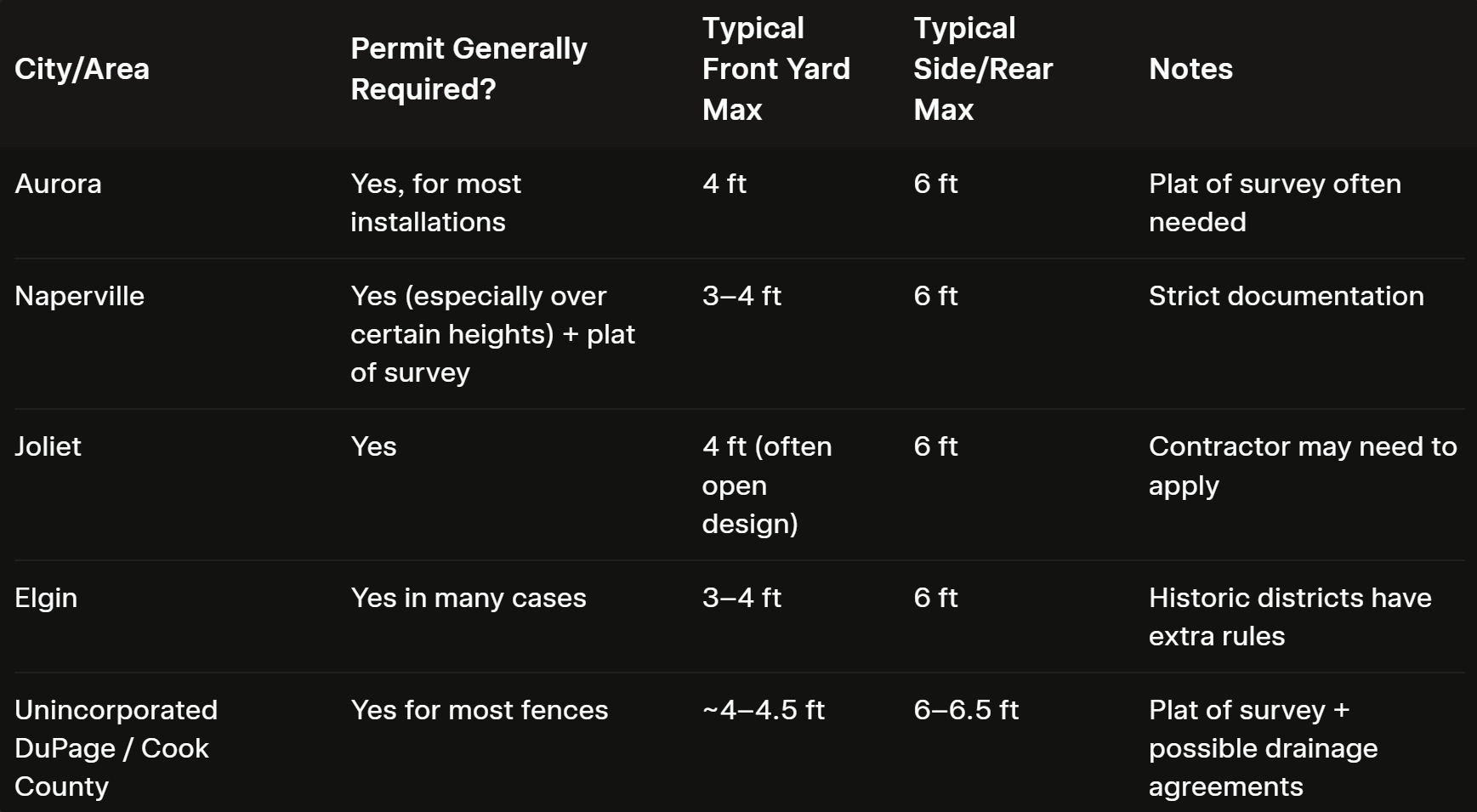
Other suburbs (Schaumburg, Orland Park, Wheaton, etc.) follow similar patterns: permits are common, height limits favor lower front-yard fences for visibility/safety, and the “finished” (good) side of the fence usually must face outward toward neighbors or the street.
What You’ll Typically Need to Apply
When a permit is required, expect to submit some combination of:
- Completed application form
- Current plat of survey showing the proposed fence location, distances to property lines, and existing structures
- Description of materials, height, and style
- Cost estimate or contractor information
- HOA approval letter (if applicable)
- Proof that utilities will be marked (call JULIE at 811 before any digging)
Fees usually range from $50–$150 for standard residential projects, though they can be higher based on project value or additional reviews (drainage, floodplain, historic district). Fence companies will charge for administration of the permit.
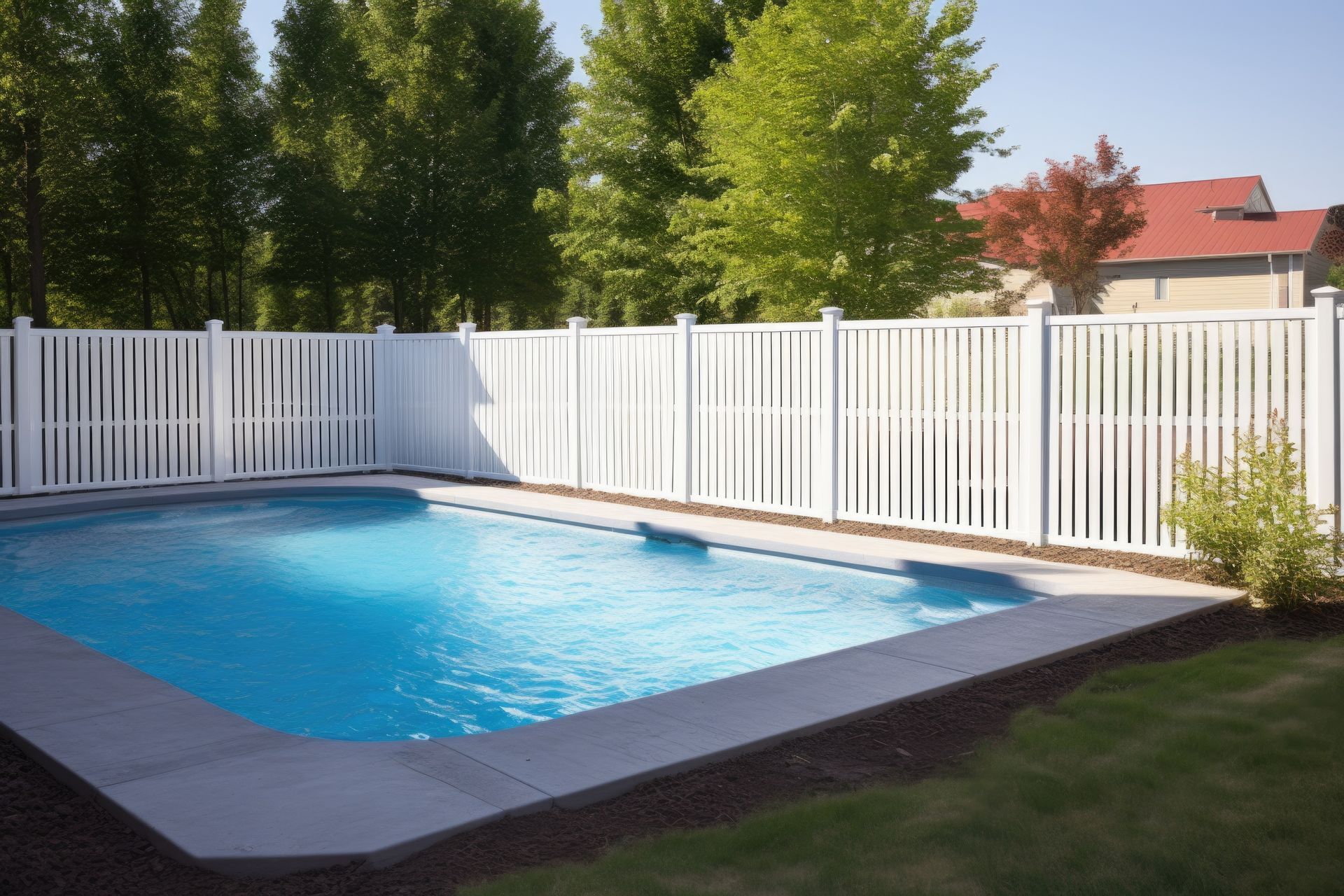
Pool fences almost always require a permit and must meet specific safety barrier standards (self-closing/self-latching gates, minimum height, no climbable features).
Other Important Considerations
- Property lines and surveys: Installing a fence even a few inches over the line can create legal headaches. A professional survey is often wise (and sometimes required).
- Easements and utilities: Fences in drainage or utility easements may be restricted or require special agreements. Always call 811 (JULIE) to have underground lines marked.
- Corner lots: Extra sight-line (visibility triangle) restrictions often apply near intersections.
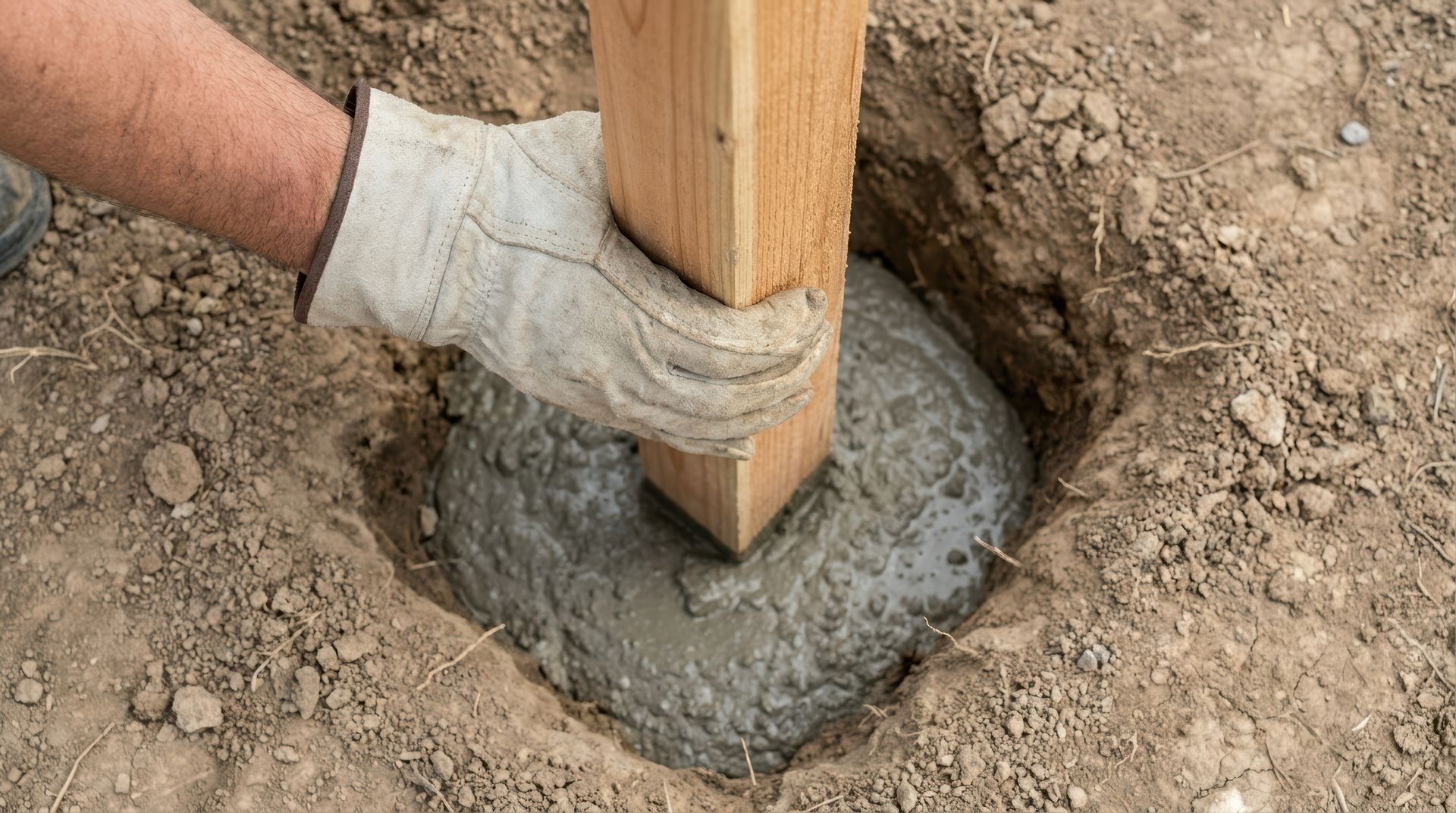
- Frost line: Northern Illinois frost depths are typically 36–42 inches. Posts must go below this depth to prevent heaving—something good contractors account for regardless of permit rules.
- Consequences of skipping a permit: Possible stop-work orders, fines, forced removal or modification of the fence, and complications when selling the home.
Inspections
Some towns and cities require additional inspections. Most municipalities will require at least a fence permit and then a final inspection. There are a handful of towns in Illinois that require post hole inspection. This adds an additional layer to the fence installation. Post holes will need to be dug to meet a certain requirement of depth and width, then the city comes out to inspect those measurements.
There are other towns that require an inspection of the property lines (very rare). A string line inspection consists of finding all 4 property markers, running a string from corner to corner, and leaving it up for the city inspector to verify its accuracy.
These additional inspections add time to your install and don't always go smoothly. The final inspection is the most common, which usually consists of a drive-by visual to ensure it meets their requirements and matches the permitted layout.
Frequently Asked Questions
Do I need a permit for a 6-foot privacy fence in Illinois?
In Chicago, yes (over the 5-foot threshold). In most suburbs, yes.
Can I install a fence on the property line?
Often yes, but local rules may require a small setback (a few inches). Shared division fences may trigger the Illinois Fence Act cost-sharing rules.
What if I’m replacing an existing fence?
Many cities still require a permit for replacements, especially if height or location changes.
How long does the permit process take?
Simple residential permits can take a few days to a couple of weeks. Complex or historic-district projects take longer.
Bottom Line
Whether you need a permit to install a fence in Illinois comes down to your exact location, the fence height and materials, and local zoning rules. Chicago offers a relatively clear 5-foot exemption for many projects, while most suburbs require permits more broadly.
Before you dig or order materials: Contact your local building or zoning department (or check their website for fence permit guides). Provide your address and proposed fence details for the most accurate answer. A reputable local fence contractor will usually handle the permit process for you as part of the job.
Doing it right the first time protects your investment, keeps neighbors happy, and avoids costly corrections later.
To speak to one of our fence experts, please contact us directly 847-750-4995 or email schaumburg@76fence.com
Fence Installation Blog




How to Upgrade Your Chain Link Fence with Privacy Slats: Benefits, Styles & Installation in Illinois